|
| |||
 |  | Gator Springs Gazette a literary journal of the fictional persuasion | |
|
| |||
|
| |||
| | Gator Springs Gazette a literary journal of the fictional persuasion | |
|
| |||
| HOOTERS AND HONKERS - POETRY(page eight) |
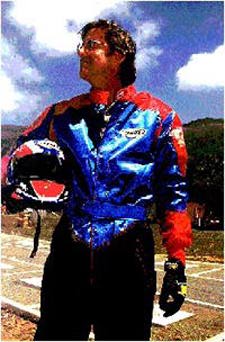 AN INTERVIEW WITH AN INTERVIEW WITH CAPTAIN AMERICA Carrie Berry interviews John Kilroy/aka CyberClem Carrie:
Well, CC..your poetry is quite unique. What inspired this rambling narrative style? CyberClem: My friends are very non-literary. Asking them to read poetry is akin to asking if you could run over their feet with a car. I don't think this is right. I think poetry is the most powerful force in the world, next to love and magic. It is the poet's obligation to overwhelm the reader, any reader. I would like my friends to some day say, "Man, that was bitchin," after reading a book of my poems. Now, this sounds stoopid, but it would be quite an accomplishment for me. A bunch of people could argue with me, but I'm right. The rambling narrative style is similar to the way I might describe something that happened to me, with the added ability to take the time to amp it up and sneak in the poetry that keeps ringing after the story is over. Language is the house; poetry is the ghosts. If you're haunted, you'll come back. Carrie: This electronic medium has some potential that can't be approached in printed formats. What do you think of the Internet and its potential for the poet? CyberClem: Poetry is not an easily consumable item. Where do you find it? How do you purchase it? And, more to the point, how do you find poetry that knocks you down, and avoid spending time and money for poetry that bores you to death. The Internet offers a very interesting solution. If BBs or Usenet groups or ISPs could function as workshops and the Web could function as available literature, then there is a stepladder that is both democratic and reflective of market forces. Whoever kills 'em in a mega-workshop setting, gets a reputation and graduates to web sites. Readers follow them to the web sites. Once you find web editors with similar tastes to yours, you bookmark them and keep returning. You follow their advice on other web sites. The Internet works the way of dirty jokes and legends—complete freedom of choice for every individual in the chain to pass it along. Eventually, non-poets join the party. If you're killer as a poet, you don't have to wait for the New England Journal of Contemporary Literature to put you in their Fall, 1997, issue upon the recommendation of the University of Connecticut Professor of Literature who primarily suggests old grad students of his. Do it now. If you're killer, kill 'em now. Carrie:
"Publishing" on the Internet has its limitations, too. Do you have any frustrations you'd like to discuss? CyberClem: I love the Internet, but I lack the time to really make it whirl and purr for me. As a poet, I have been isolated. The Internet allows me to join the tribe of poets. My tribe. Carrie: And there is one question several people have asked — Do you wear anything under those leathers? ; ) CyberClem: I wear confidence like a second skin, so there's nothing underneath the driver's suit but my enormous cockiness. UPDATE FOR 2002 Carrie: And thank you, CC, for gracing us with your presence. I understand, btw, that you have finally published that book — or I should say THREE books in one skin. How can I get my hands on it? CyberClem: Yes, Torque is finally a reality. Of course, I'll send you an autographed copy when it's released in April. Gazette readers can find out more about it at http://www.chrome-press.com/torqueEditor's Note: "The Fandango" to which CyberClem refers in this 1996 interview was a website with a "bar" format, which included a place for poets to comment in a social setting, as well as a forum for poetry discussion. The nature of Fandango Virtual has changed since it moved to its UK home in 1997, but FV will continue to exist as a site for spotlighting writers around the world whose work continues to touch me. on to page nine back to the front page |